
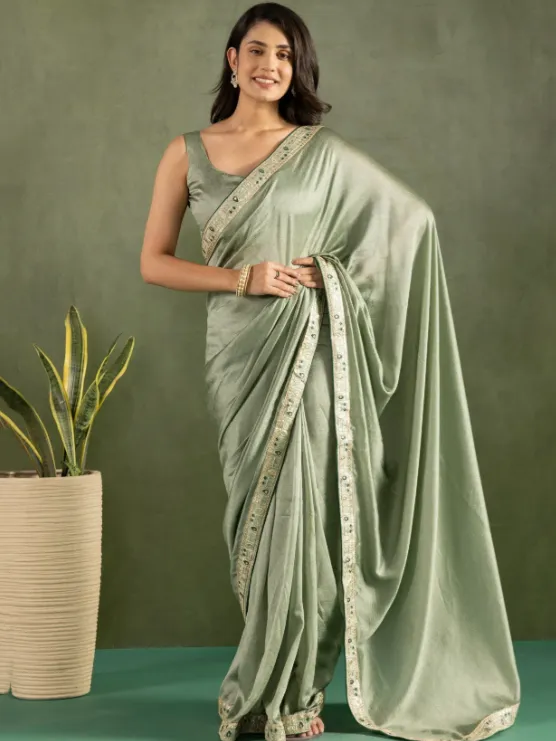
Walk into many traditional ceremonies and you will see a sea of crimson and scarlet. It looks grand, yet it also makes it easy to blend into the crowd. If you would rather be remembered gently, a Green Saree is a lovely choice. It feels fresh, respectful and calm, and it still carries enough richness to suit a celebration held in daylight, without any fuss or fear of looking underdressed.
Why Stepping Away from Red Works
Red dominates festive dressing because of its auspicious meaning, and that meaning deserves respect. Yet a room full of one colour tends to flatten every individual outfit. Choosing a cooler or sunnier shade lets you honour the occasion while giving the eye a place to rest, which makes you easier to spot in a crowd. Guests will remember the feeling of freshness long after the details fade.
There is also a practical benefit. Photographers love contrast, and a bright leafy or golden outfit stands out clearly against reds, oranges and maroons in the background. You will appear in more candid pictures, and your colours will look cleaner, because they are not competing with a dozen similar tones standing close to you. Even simple fabrics look richer when the shade is clean and distinct.
Sunshine Shades That Photograph Warmly
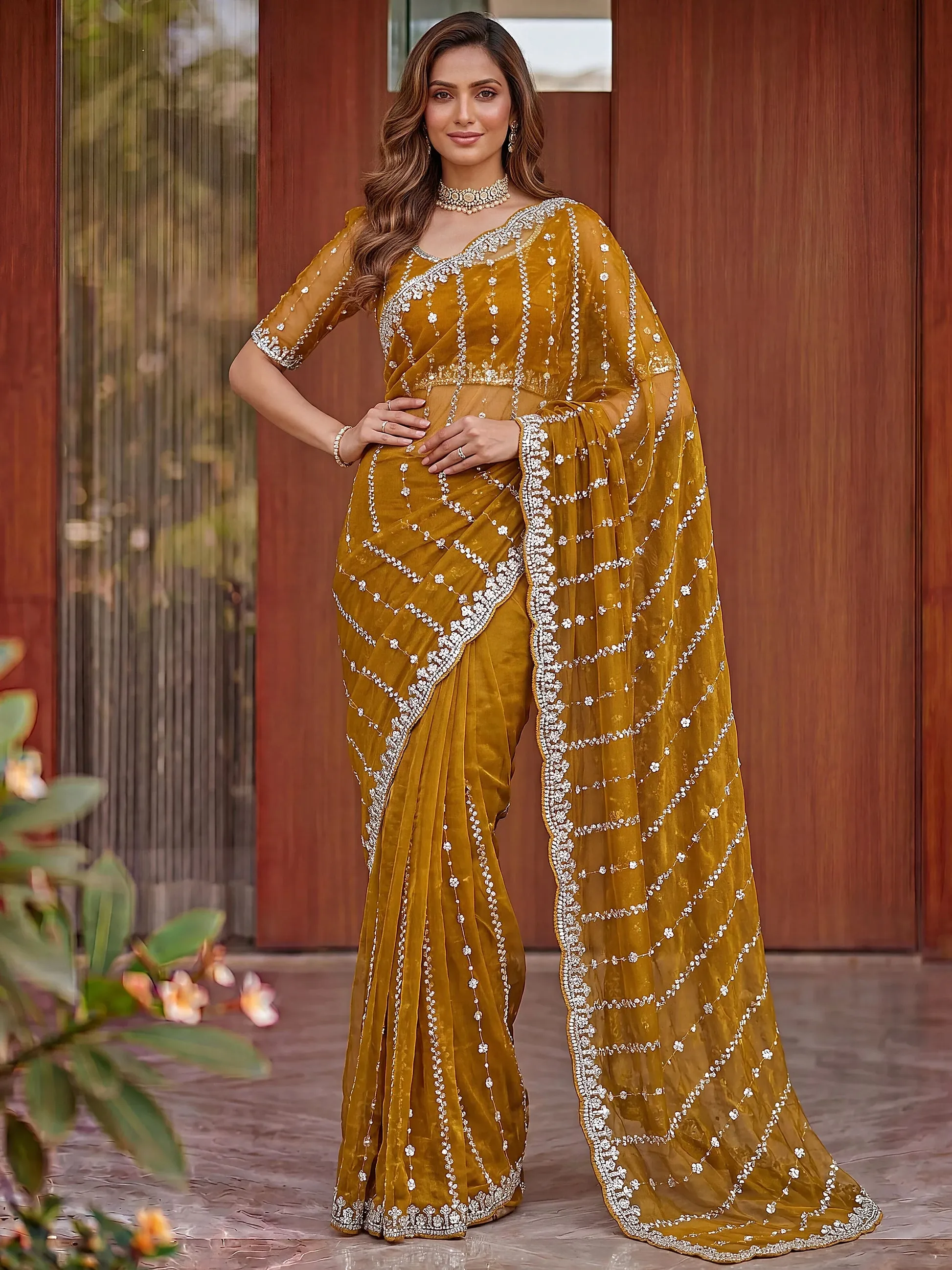
A Yellow Saree brings instant warmth to a morning ceremony, and it carries a long cultural link with spring, turmeric and new beginnings. Lemon and mustard tones suit lighter skin, while deeper marigold glows on olive and brown complexions. Cotton silk and georgette hold the colour well and avoid the harsh glare that glossy satin sometimes creates. If you tan easily, a slightly deeper tone will always look more flattering.
Keep the rest of the look grounded. Pair sunny fabric with a contrast blouse in deep green, burgundy or classic ivory so the outfit does not feel too loud. Gold jewellery blends naturally with these shades, while heavy silver can look cold. Small, well placed details almost always work better than a crowd of competing accessories. A single contrasting colour, repeated twice, is the easiest rule to follow.
Pairing Colour with the Right Blouse and Border
The blouse decides how formal the outfit appears. A matching tone looks serene and elongating, while a contrasting one adds energy. For a ceremony with elders present, choose full sleeves or elbow length styles with a modest neckline. They look graceful, protect against the sun and allow you to move comfortably through long rituals without any distraction. Soft cotton lining inside the blouse adds comfort during warm hours.
Borders offer another quiet way to personalise the outfit. A narrow zari line looks refined, a woven temple pattern feels traditional, and a wide contrast panel gives modern drama. Match the border metal to your jewellery, and the whole ensemble will appear planned rather than assembled, even if you pulled it together in a rush. Lay everything out together the night before and judge the colours in daylight.
Etiquette Points Worth Remembering
Avoid white, black and bridal shades of red at traditional ceremonies unless the family has specifically asked for them. Pastels and mid tones are safe, and a brighter hue is welcome as long as the fabric looks dignified. When unsure, ask a relative about the dress code, which people usually appreciate as a sign of thoughtfulness. A quick message costs nothing and saves you from last minute doubts.
Think about the venue as well. Temples and homes often involve sitting on the floor, so choose a drape with enough fall and a petticoat that allows free movement. Carry a light dupatta or shawl in case head covering is expected, and remove heavy footwear gracefully at the door without disturbing the pleats. Keep spare socks in your bag for polished floors.
Accessories That Keep Bright Shades Looking Refined
Bright fabric already speaks loudly, so let your accessories speak softly. Jhumkas, thin bangles and a small bindi are usually enough. A fresh gajra tucked into a neat bun adds fragrance and tradition without extra weight. Bold stones can work too, but limit yourself to one statement piece for a balanced finish. Remember that restraint always looks more expensive than excess.
Finish with comfortable footwear and a compact bag. Kolhapuri sandals or padded flats are ideal for long days, and a small potli holds the essentials. When the colour, border and details agree with one another, you will look composed and radiant, and nobody will wonder why you skipped the traditional red.